



- Jul 6, 2026
- Sunstart Stories
Number Sense: The First Step Toward Mathematical Thinking | Early Math Skills for Kids
When people think about math, they often picture numbers, equations, and calculations. Before children learn to add, subtract, or multiply, they first need a strong foundation: number sense.
Number sense is one of the most important early math skills for kids, helping children understand what numbers actually mean. It supports confidence in math learning, improves problem-solving ability, and lays the foundation for long-term mathematical thinking.
Research in early childhood education suggests that children with well-developed number sense are more likely to build confidence and succeed in later mathematics learning.
What Is Number Sense in Early Math Learning?
Number sense is the ability to understand numbers in a meaningful way. Instead of simply memorizing facts, children learn how numbers connect to quantities, patterns, and everyday experiences.
A strong number sense allows children to:
- Understand that 8 is greater than 5
- Recognize that a group of 10 objects is larger than a group of 6 without counting one by one
- Know that the number “3” represents three real objects, not just a written symbol
This understanding is a core part of preschool math development and early math enrichment programs, forming the foundation for future mathematical thinking.
How Does Number Sense Develop in Children?
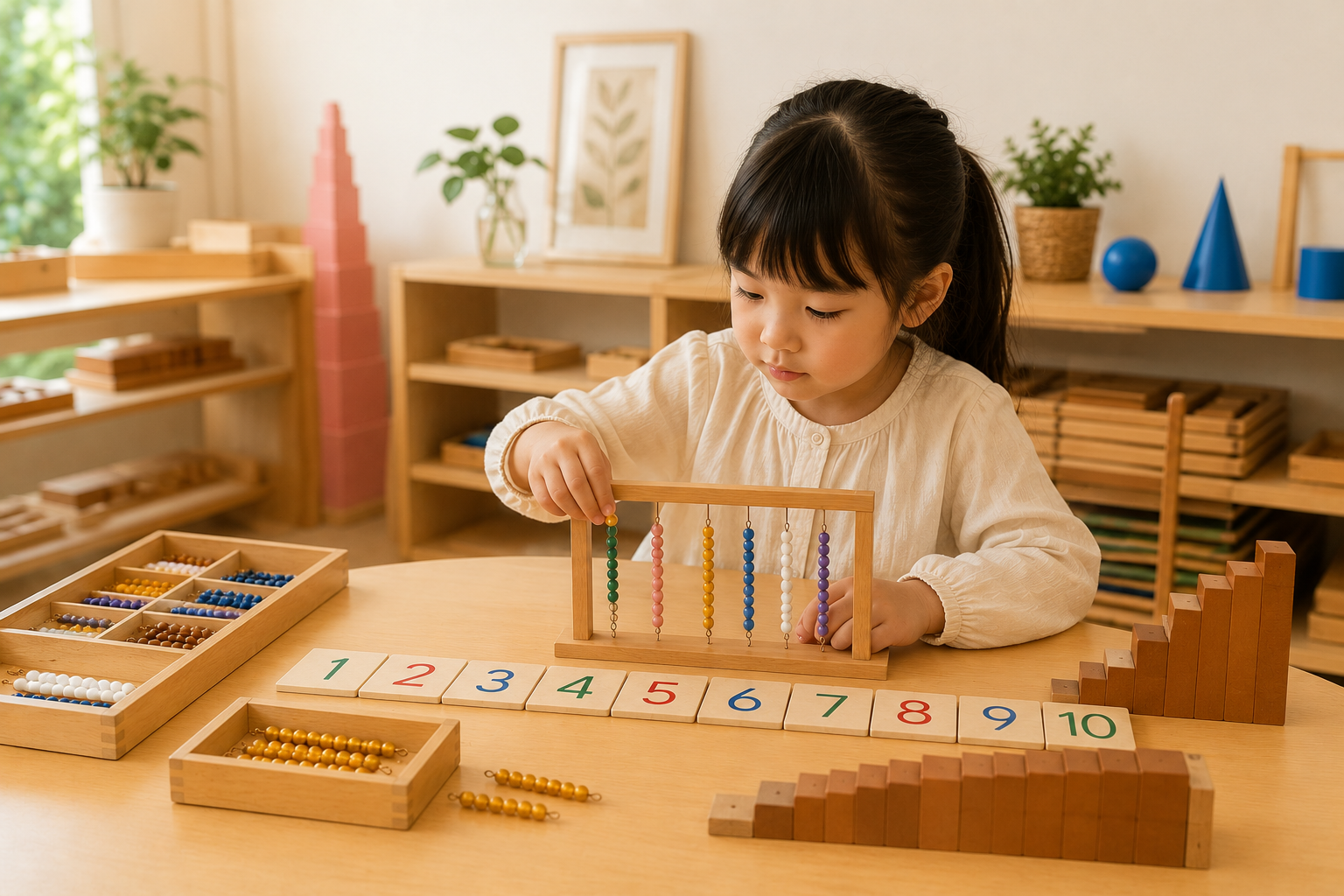
Number sense develops naturally through everyday experiences and early math learning activities.
Children first learn basic concepts like “more” and “less.” As they grow, they begin to:
- Connect number words with real objects
- Recognize written numerals
- Build a mental number line
- Compare, estimate, and calculate more efficiently
Every time children count toys, compare snacks, or notice which group has more, they are strengthening their number sense and mathematical thinking skills.
These early experiences support logical thinking and long-term success in math.
Why Is Number Sense Important for Math Learning?
Strong number sense is a key predictor of success in early math education and later academic performance.
Children with well-developed number sense are more likely to:
- Understand numbers and quantities clearly
- Compare and order numbers with confidence
- Estimate reasonable answers
- Develop a strong understanding of place value
- Solve math problems using flexible thinking instead of memorization
These skills help children become confident learners who see math as something to understand, not just memorize. This is especially important in math enrichment for kids, where conceptual understanding is emphasized over rote learning.
Signs a Child May Need Support in Number Sense Development
Some children may need additional support in developing number sense and early math skills if they:
- Frequently confuse larger and smaller numbers
- Struggle with estimating answers
- Have difficulty understanding place value
- Rely heavily on counting for simple calculations
- Feel overwhelmed when solving word problems
These challenges do not mean a child is weak in math. Instead, they often indicate that foundational number sense skills are still developing and need more hands-on learning experiences.
How Parents Can Support Number Sense at Home
The good news is that number sense can be developed naturally through everyday math enrichment activities at home.
Simple and effective activities include:
- Counting fruit while grocery shopping
- Comparing groups of toys or blocks
- Asking, “Which pile has more?” or “How many do you think there are?”
- Playing board games that involve counting and strategy
- Encouraging estimation before counting
- Counting steps while walking
- Setting the table together
- Cooking or baking using simple measurements
These daily experiences help children connect math learning with real life, making early math skills more meaningful and engaging.
Final Thoughts: Building Strong Foundations in Math Learning
Strong mathematical skills begin with strong number sense.
When children understand what numbers mean—not just how to calculate with them—they develop confidence, curiosity, and flexible thinking that supports lifelong learning.
Mathematics is about much more than getting the right answer. Through strong number sense development, children build the foundation for success in early math education, math enrichment programs, and future academic learning.
Every meaningful math journey begins with understanding numbers—not just calculating them.