



- Jun 26, 2026
- Parenting Insights
From Hands-On Play to Mathematical Thinking: How High-Quality Math Enrichment Empowers Children to Thrive
Many parents recognize the importance of hands-on learning, independence, and learning through discovery. Rather than simply teaching children what to think, effective learning experiences encourage children to explore, question, and understand the world through direct experience.
The same philosophy can be applied to mathematics.
When children are given opportunities to manipulate objects, observe patterns, and discover relationships on their own, math becomes more than numbers on a worksheet—it becomes a meaningful and engaging learning experience.
Why Hands-On Learning Matters in Math
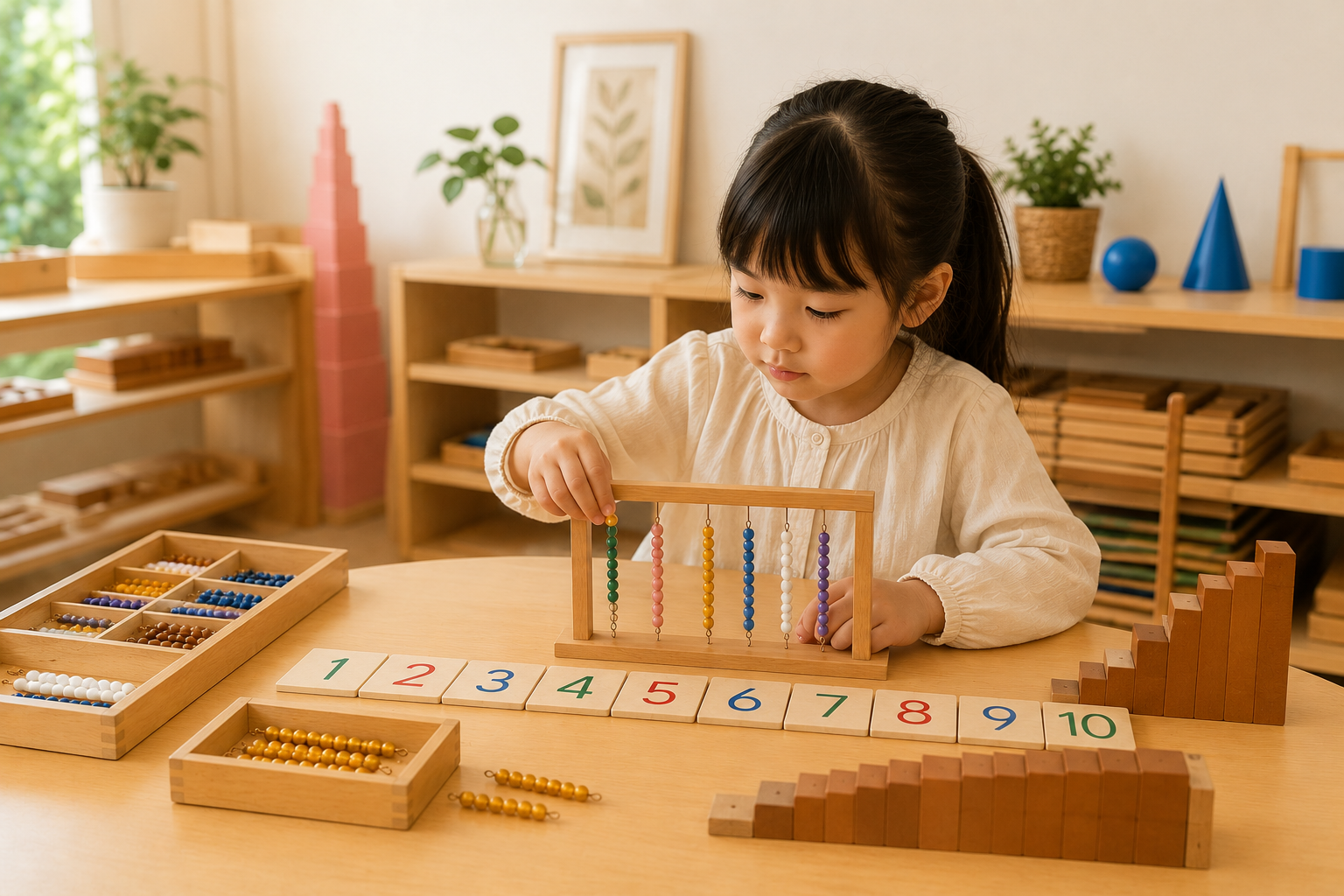
Young children learn best when they can touch, move, sort, build, and experiment.
Imagine asking a child:
"Which tower is taller?"
Instead of showing a picture in a textbook, we provide blocks of different lengths and allow the child to build, compare, and discuss what they notice.
Through this simple activity, children are developing:
* Observation skills
* Comparison and measurement concepts
* Mathematical vocabulary
* Logical reasoning
Most importantly, they are constructing understanding through experience.
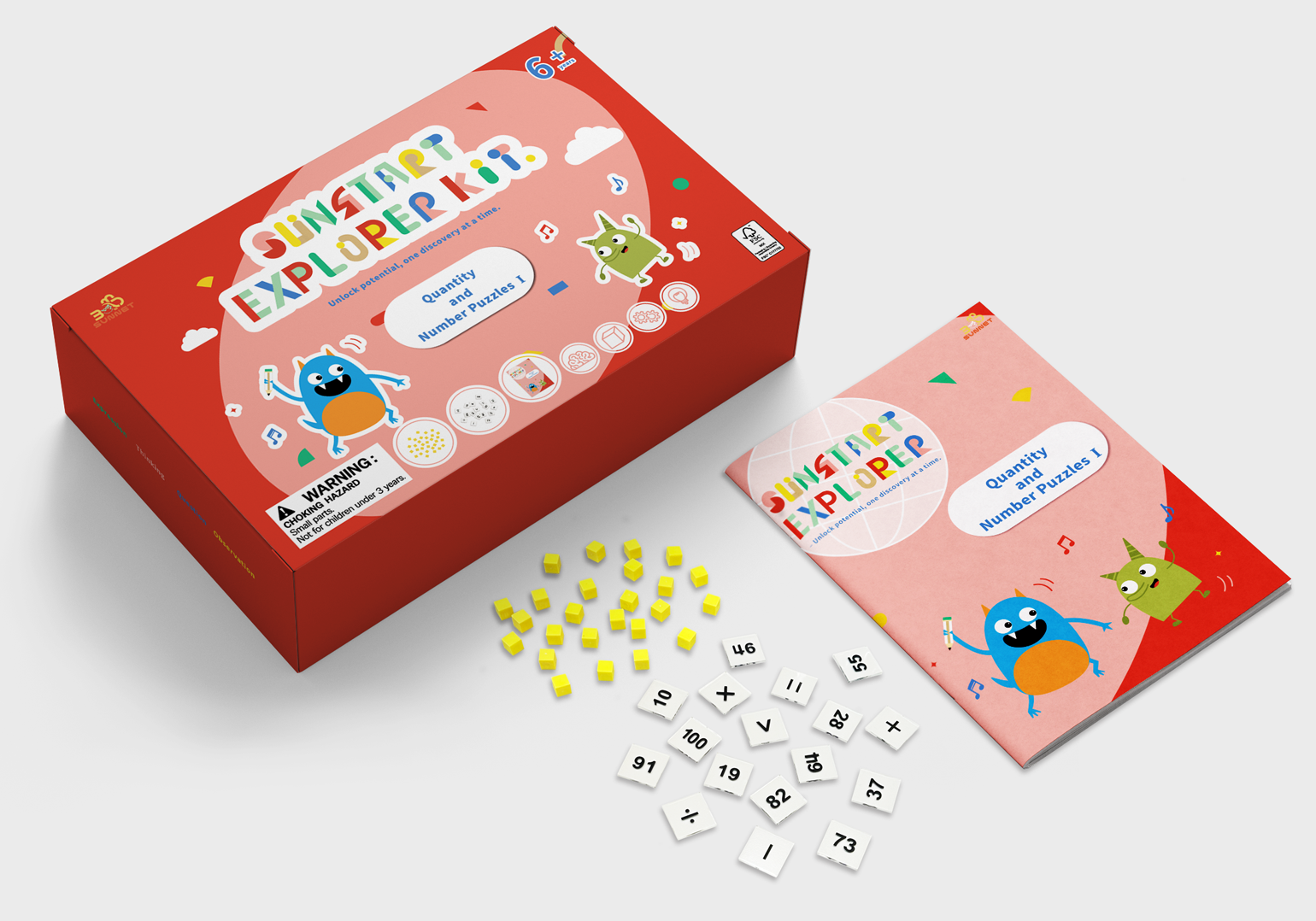
A Simple Activity: Building Number Sense with Colored Cubes
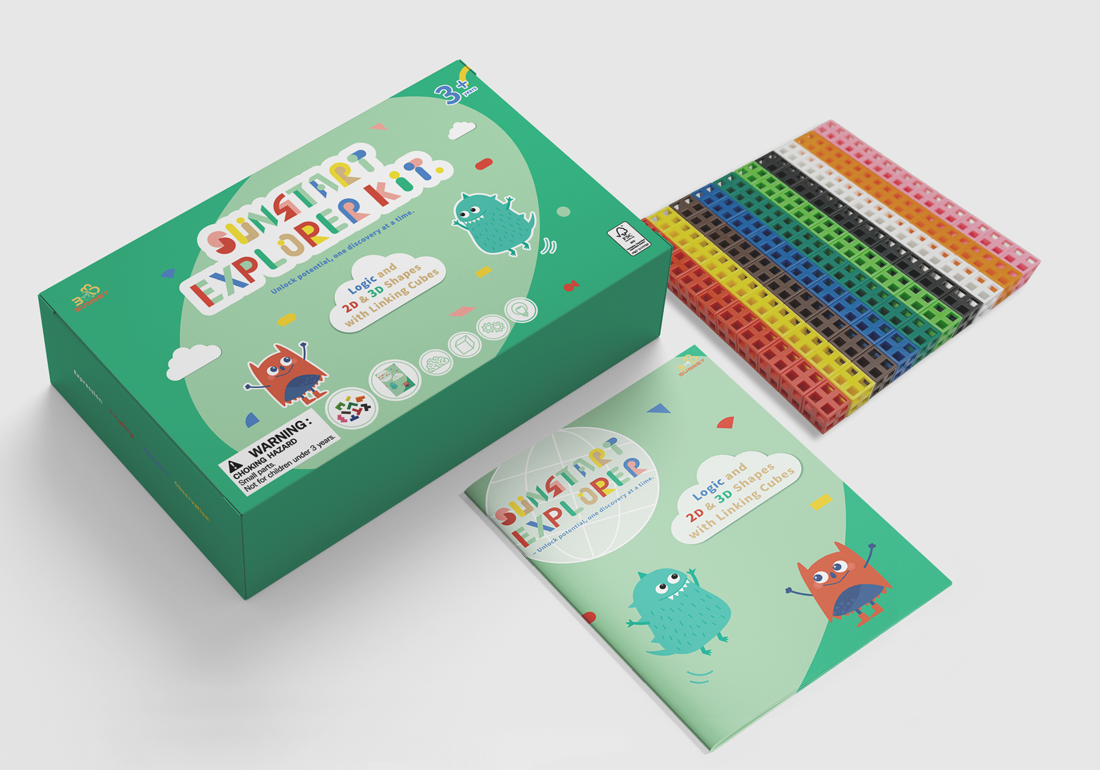
One popular hands-on activity involves colored cubes or linking blocks.
A child may be asked to build:
* A tower of 3 cubes
* A tower of 5 cubes
* A tower of 8 cubes
Then the teacher asks:
"What do you notice?"
The child might discover:
* 3 and 5 together make 8
* Different towers can be combined
* Numbers can be broken apart and recombined
Rather than memorizing an addition fact, the child experiences it physically.
This type of exploration helps develop a deep understanding of number relationships and prepares children for more advanced mathematical thinking.
Learning Patterns Through Discovery
Patterns are everywhere in mathematics.
An enrichment activity might involve arranging colored pattern blocks:
🔴 🔵 🔴 🔵 🔴 🔵
The teacher may ask:
"What comes next?"
As children identify and extend patterns, they begin developing skills that later support:
* Algebraic thinking
* Prediction
* Problem-solving
* Logical reasoning
What appears to be a simple game is actually building the foundation for future mathematical success.
Encouraging Children to Explain Their Thinking
One of the most valuable aspects of enrichment learning is discussion.
Instead of asking:
"What’s the answer?"
Teachers ask:
"How did you figure it out?"
For example, when solving a puzzle, one child may explain:
"I tried several ways until I found a pattern."
Another child might say:
"I looked at the shapes and eliminated the ones that didn’t fit."
These conversations help children develop communication skills, confidence, and the ability to think critically about their own reasoning.
Shared Principles of Effective Math Enrichment
High-quality math enrichment programs are built on several important beliefs:
✔ Children learn best through active exploration.
✔ Learning should be meaningful and engaging.
✔ Embracing mistakes as a natural part of the learning process.
✔ Understanding is more important than memorization.
✔ Children should be encouraged to think independently.
When children are given opportunities to manipulate materials, solve challenges, and explain their ideas, they become active participants in their own learning journey.
The Goal Is Not Faster Math—It’s Deeper Understanding
Many parents assume advanced math means moving ahead to harder calculations. However, the true purpose of enrichment is to help children develop a strong mathematical foundation.
When children learn through hands-on experiences, they build:
* Confidence
* Curiosity
* Critical thinking skills
* Problem-solving abilities
* A lifelong love of learning
These are the qualities that support success not only in mathematics, but in every area of life.
Final Thought
A child who discovers a mathematical idea through exploration is far more likely to remember and understand it than a child who simply memorizes a rule.
By combining hands-on learning with meaningful math enrichment activities, we help children become thinkers, explorers, and confident learners—ready to tackle future challenges with confidence and curiosity.