




- Sep 22, 2026
- Parenting Insights
3 Logic Games for Kids: Math Games for Elementary Students That Build Problem-Solving Skills
Your child sits down with their homework, looks at the first math problem, and slides off their chair. Not dramatically, just quietly, the way kids do when something feels too big to start. If this scenario sounds familiar, you are not alone.
Most parents have seen this moment and wonder how to build the confidence that makes a child want to stay engaged. The answer often starts long before standard quizzes and worksheets arrive.
1. Observing Your Child's Natural Problem Solving During Playtime
Recognizing Everyday Logic Before Formal Learning Begins
Children solve problems constantly before anyone calls it math. Based on our practical experience, a four-year-old stacking blocks is testing structural reasoning. Similarly, a six-year-old deciding how to split eight crackers with a friend is working through early division logic. These moments happen dozens of times a day and serve as the foundation that formal education is built upon.
Parents often notice that a child is far more persistent when they choose the activity themselves. That patience and willingness to try again after failing is exactly the thinking habit that supports complex learning later.
Why Play Is the Ideal Setting for Cognitive Growth
Compared with more formal exercises, play can create a lower-pressure setting in which mistakes feel like part of the process. When a child rolls dice in a game, getting an unexpected number is not a mistake; it simply changes what happens next. This gives children repeated opportunities to adjust their thinking, try another strategy, and keep going.
This is why math games for elementary students are not simply a fun add-on. They are the environment where trial-and-error reasoning, pattern recognition, and logical sequencing happen naturally, without pressure.
2. Defining What Logic Challenges Actually Teach Young Students
Moving Beyond Memorization to True Understanding
When we discuss building "thinking skills" at SunStart, we mean something specific and observable: a child who encounters an unfamiliar problem and still tries. Rather than a child who simply recalls the right formula, we aim to develop a child who asks, "What do I already know that could help me here?"
Thinking skills in this context mean the habit of reasoning through uncertainty. It involves noticing patterns, testing ideas, adjusting when something does not work, and expressing the logic out loud.
The Role of Pattern Recognition in Early Education
Pattern recognition is a fundamental skill for almost every area of mathematics. Before a child can understand multiplication, they need to see that groups of things repeat in predictable ways. Before fractions click, they need experience comparing sizes, lengths, and portions in real contexts.
Logic games create those experiences without drilling. When a student plays Addition Subtraction Bingo, they go beyond simply practicing arithmetic. They train their mind to evaluate multiple possibilities quickly, which is a highly transferable reasoning skill. This builds true understanding rather than basic rote memorization.
3. Matching Math Skills to Age: A Logic Game Selection Framework
Evaluating Readiness Based on Observable Behaviors
Choosing the right game is less about age labels and more about what a child can already do comfortably. The table below offers a practical framework based on observable behaviors rather than strict grade-level assumptions.
|
Grade Range |
Observable Behavior Indicator |
Target Math Skill |
Recommended Game |
Prep Time |
|
Pre-K / K (3–6 yrs) |
Sorts objects by color or size; counts to 10 |
Quantity sense, shape recognition |
Logic and 2D &3D shapes with Linking Cubes |
No-prep |
|
K–1 (5–7 yrs) |
Counts on from a number; recognizes simple patterns |
Addition to 20, sequencing |
Addition Subtraction Bingo |
Low (print cards) |
|
1–2 (6–8 yrs) |
Adds two-digit numbers; understands "more" and "less" |
Two-digit addition, decision-making |
101 Points with dice |
No-prep |
|
1–2 (6–8 yrs) |
Follows multi-step instructions; enjoys movement |
Addition/subtraction with self-monitoring |
Action Addition and Subtraction |
Low (make one action die) |
|
2–3 (7–9 yrs) |
Skip-counts; beginning multiplication awareness |
Multiplication foundations, strategy |
Multiplication Division Bingo |
Low (print cards) |
|
3–5 (8–11 yrs) |
Understands place value; can explain their reasoning |
Computational thinking, estimation |
101 Points (multiplication variant) |
No-prep |
By matching activities to these specific developmental markers, parents and educators can ensure that challenges remain engaging rather than overwhelming. The clearest signal that a game is well-matched is simply that the child asks to play it again.
Balancing Challenge and Frustration in Early Learners
If a child finishes every round easily, the thinking muscle is not being utilized. If they disengage after two minutes, the challenge is likely too steep. The productive zone sits right between those two extremes. You can usually spot it because the child is quiet, focused, and occasionally muttering to themselves. That is what active reasoning looks like.
4. Addition and Subtraction Bingo: One of the Easiest Math Games for Elementary Students
Preparing the Bingo Cards and Math Problems
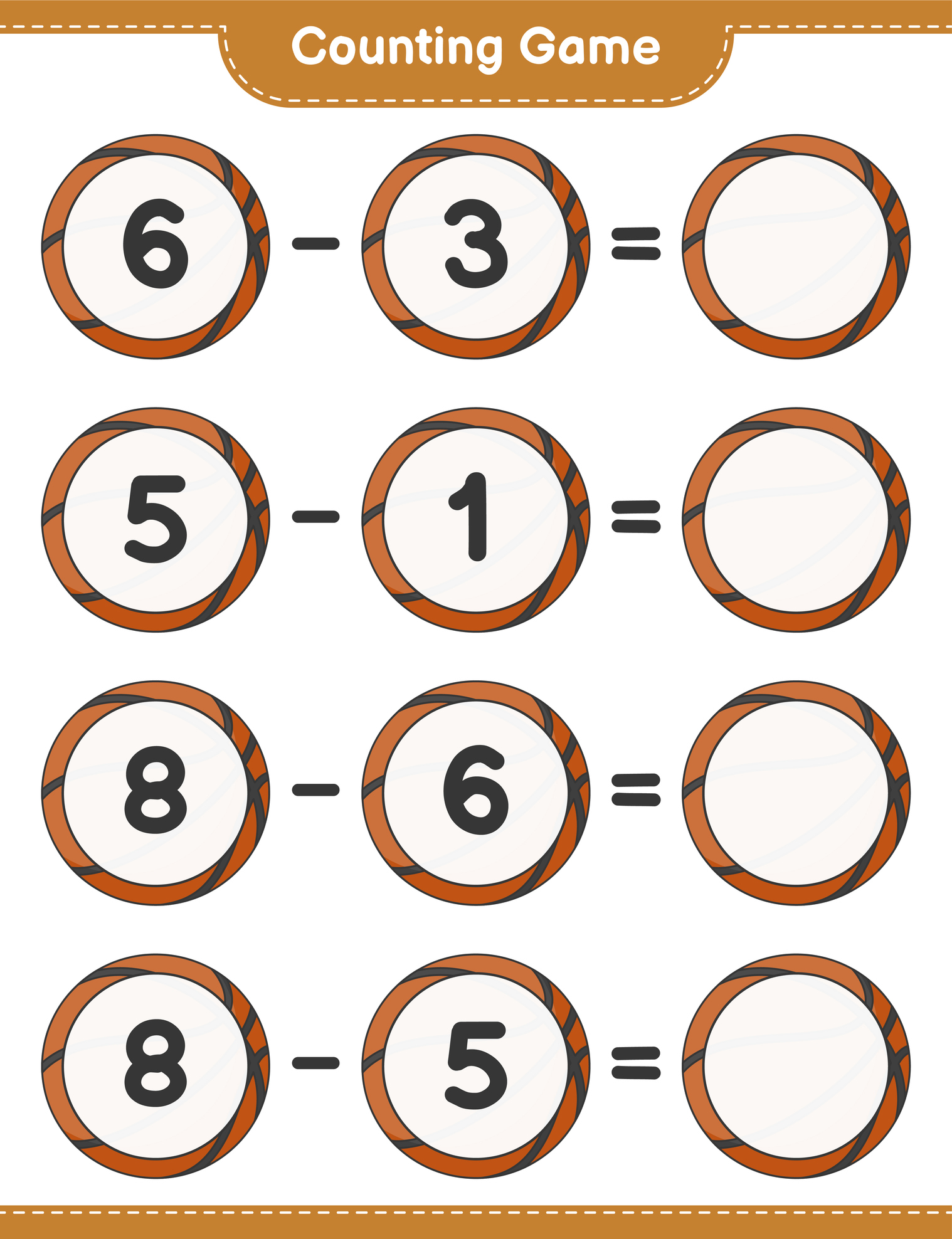
This is one of the most adaptable classroom math games for lower elementary students and home tables alike, requiring almost nothing to set up. Create bingo cards filled with answer numbers (not the equations themselves). A K–1 card might use numbers 0–20; a second-grade card can extend to 50 or beyond.
Write out a stack of equation cards: "7 + 3," "12 – 5," "9 + 6." These become your call deck.
Step-by-Step Instructions for Group Play
-
Distribute one bingo card and a set of markers (coins, beans, or paper squares work perfectly) to each player.
-
The caller draws an equation card and reads it aloud: "What is 8 plus 4?"
-
Players mentally solve the problem and look for the answer on their card.
-
First to complete a row, column, or diagonal calls out and reads back the equations they solved to verify.
The verification step is where the real learning happens. A child who explains, "I got 12 because 8 plus 4, and I counted on from 8," demonstrates logical reasoning, not just memory.
Adapting Difficulty for Different Learning Paces
For students who need more support, allow them to use a physical number line on the side. For students who move quickly, introduce subtraction-only cards or mixed operation cards. You can run the same game simultaneously across two difficulty levels since the flexible bingo format accommodates this easily.
5. 101 Points: Using Dice to Develop Computational Thinking and Strategy

Setting Up the Game and Required Materials
Materials needed: one standard six-sided die per group, paper, and a pencil. 101 Points is a no-prep game that plays in 10–15 minutes, making it ideal for a classroom warm-up or an after-dinner table activity.
Divide players into two teams, or play in small groups of three to four.
How Students Calculate and Strategize to Win
Each team takes turns rolling the die. After each roll, the team decides whether to use the number as shown, or multiply it by 10. Roll a 5, and you can score 5 points or 50. Roll a 2, and choose between 2 and 20.
Before starting, agree on a fixed number of rounds, such as 10 rolls per team. On each turn, players add either the face value of the die or 10 times that value to their running total. After the final round, the team whose total is closest to 101 without exceeding it wins.
This decision point is where computational thinking and strategic reasoning intersect.Students are estimating, comparing numerical options, and adjusting their strategy based on their current total and how close they are to 101. For second-grade learners building number sense, this kind of active reasoning with two-digit numbers is far more engaging than a traditional assignment.
Encouraging Cooperative Play and Peer Learning
When teams discuss their decision out loud, they explain their reasoning to each other. That verbalization deepens understanding in ways that silent individual work rarely achieves. Encourage teams to talk through every roll.
6. Action Addition and Subtraction: Combining Logical Puzzles With Physical Movement

Creating Custom Action Dice for the Classroom
Take a blank wooden cube (or wrap a regular die in masking tape) and label each face with a physical action: Clap, Jump, Blink, Twist, Snap, Wiggle. This becomes your action die. You will also need two regular dice.
Total prep time is under five minutes, and the customized action die lasts indefinitely.
Guiding Students Through Equations and Physical Tasks
Each player rolls all three dice. They either add the two number dice or subtract the smaller number from the larger number, then perform that many repetitions of the action shown on the action die. Roll a 4 and a 3 (adding) with "Clap," and the student does 7 claps. Roll a 6 and a 2 (subtracting) with "Jump," and they perform 4 jumps.
For younger students beginning to work with addition and subtraction, the physical feedback of counting jumps or claps creates a concrete link between the abstract number sentence and a real quantity. The body acts as a physical number line.
Why Movement Enhances Memory Retention
When children encode learning through physical action, the experience becomes multisensory. The number 7 is not just a symbol; it is also the feeling of seven jumps. Many educators have observed that the connection between physical engagement and concept retention in early learners. Children who might drift during a paper exercise stay completely present when their body is part of the answer.
7. Structuring the Learning Cycle: Combining Digital Courseware With Hands-On Play
Starting With Self-Paced Digital Exploration
SunStart uses a dual-phase learning cycle designed to move children from exploration to deeper understanding. The first phase, Child-Led Exploration, gives children opportunities to observe, try, compare, adjust, and discover through digital courseware, stories, teaching aids, and hands-on activities.Interactive stories, visual animations, and game-based prompts let a child encounter a math idea on their own terms, building intuition without the pressure of being observed.
This matters because children who arrive at an understanding independently are far more likely to be able to explain it. Explaining is the clearest proof of real comprehension.
Solidifying Concepts With SunStart Linking Cubes and Workbooks
The second phase, Parent-Child Co-Creation, introduces guided discussion. Parents or teachers ask questions, listen to the child's ideas, and encourage them to explain how they reached a conclusion. Kits like Logic and 2D & 3D shapes with Linking Cubes let children build, count, decompose, and compare quantities using their hands. A child who spends time exploring a shape concept on screen and then builds that same shape from physical cubes experiences the idea through two completely different sensory channels.
SunStart Full-Color Workbooks then invite children to record, create, and express what they discovered. This structured cycle explore digitally, build physically, express in writing is the learning structure that connects daily play to lasting understanding.
8. From Screen to Linking Cubes: A Family Observation on Focus
Addressing Frustration Through Tangible Problem Solving
According to our observations, a typical 7-year-old learner might engage happily with standard digital games for about eight minutes before their attention drifts. For instance, one mother noticed her child was clicking through prompts quickly, not pausing to think. When she introduced SunStart Teaching Aids alongside the activity, the child's approach shifted completely. They started rebuilding structures, comparing them, and taking them apart to try different configurations.
The tangible element gave them a physical problem that required active manipulation. That friction, handled in a safe context, is exactly where cognitive persistence develops.
Documenting Discoveries With Full-Color Workbooks
After the building session, the mother asked the child to draw what they had made and write one thing they noticed. The child drew two towers of different heights and wrote: "The tall one has more." It was simple, observable, and completely their own conclusion.
That kind of self-generated insight is what the SunStart Full-Color Workbooks are designed to capture. The goal is never just checking off the correct answer on a page. It is fostering a child who trusts their own thinking process.
9. Common Questions About Introducing Logic Games for Kids
What skills do logic games actually develop beyond basic arithmetic?
Logic games build pattern recognition, sequential reasoning, decision-making under uncertainty, and the habit of checking one's own work. When a child plays 101 Points and decides whether to multiply their die roll by 10, they practice estimation and risk assessment, skills that transfer to reading comprehension, science inquiry, and everyday judgment.
How long should a typical play session last for elementary-age children?
For children aged 5–7, 10–15 minutes is a productive window before attention naturally shifts. Children aged 8–11 can typically sustain 20–25 minutes of focused game play. The more important signal than time is engagement quality. If a child is talking through their decisions, the session is working.
Who can join these learning activities?
Any engaged adult can facilitate these games effectively. Parents, older siblings, and grandparents all make excellent learning partners. The facilitator's role is not to teach the math explicitly, but to ask one good question: "How did you decide that?"
Are these games useful for children who say they hate math?
Usually, children who avoid math have had negative experiences where being wrong felt bad. Games reframe that experience. Being wrong in a logic game just means your strategy needs adjusting. The feeling is completely different from getting a red mark on a worksheet, opening the door again for many hesitant learners.
10. Ready to Experience Joyful Math Learning Through Play?
Exploring Learning Scenarios That Fit Your Home
Every family's rhythm is different. Some children do their best thinking right after school, while others need dinner and downtime first. The games described here Addition Subtraction Bingo, 101 Points, Action Addition and Subtraction work in a kitchen, a living room, or a backyard. They require almost no materials and minimal setup.
SunStart Learning Scenarios are built to fit into that reality. Whether a child explores independently through digital courseware, works through activities with a parent, or joins a guided session, the learning cycle adapts to the setting. For families with young learners, exploring the Kindergarten math program or the Elementary Math for 1st Grade program provides a structured way to extend this daily play.
Inviting Your Child to Start the Discovery Process
If you are curious about what your child looks like when they are genuinely thinking, not reciting or guessing, but actually working something out, a single game of 101 Points at the dinner table will show you. Watch their expression when they decide whether to take the big number or play it safe.
That moment of deliberation is active thinking, and it is the same thinking that helps them navigate problems far beyond math. Start integrating these simple logic games today, and watch your child discover the joy of reasoning.