



- Nov 17, 2026
- Parent Guides
24 Open-Ended Problem-Solving Cards for Kids (Ages 3-8)
Open-ended problem-solving cards invite children to consider more than one possible approach, make choices, and explain their reasoning. Instead of asking only "What is 5 + 5?", you might ask, "How many different ways can you make 10?" The 24 prompts below work as conversation starters or a printable card deck. Many have multiple reasonable responses, but children should still explain and check claims about quantities, fairness, and safety.
An open-ended question can start a conversation rather than end it after one answer. The Center on the Developing Child at Harvard University describes responsive back-and-forth exchanges between children and caring adults as important for early development. Follow a child's idea with curiosity, and use real objects or drawings when a question needs testing.
Choose an Activity
Choose a playful challenge that fits your child. Each activity below includes a visual example and a simple way to explore the idea together.
| 01 "Would you rather have 3 big cookies or 6 little cookies? Why?" | 02 "Would you rather be as tall as a giraffe or as small as a mouse for a day? What everyday objects would change size for you?" | 03 "Would you rather count every chair in our home or every shoe? Which do you think is more?" |
| 04 "Would you rather share 10 crackers equally between 2 children or between 5 children? How many would each child get?" | 05 "Would you rather have a pizza cut into 4 big slices or 8 small slices? Is there more pizza either way?" | 06 "Would you rather have $1 today or receive a dime each day for 14 days? Which gives more money, and why?" |
| 07 "How many ways can you sort these toys into two groups?" | 08 "How many ways can you show the number 5 on your fingers?" | 09 "How many safe paths can you take from the couch to the kitchen without moving furniture?" |
| 10 "How many ways can you build a square? Try fingers, sticks, blocks, or your whole body." | 11 "How many ways can you share 12 large toy blocks among your family? Which ways feel fair, and why?" | 12 "How many ways can you make 10 using fingers, drawings, or large blocks?" |
| 13 "What if everything round disappeared for one day? What couldn't we do?" | 14 "What if you woke up as tall as the ceiling? What would be easy? What would be tricky?" | 15 "What if there were no numbers at all? How would we know how old you are?" |
| 16 "What if stairs came in giant steps and tiny baby steps? Which would get you upstairs faster?" | 17 "What if the week had one extra day? What would you name it, and what would happen on it?" | 18 "What if a toy store accepted only paper stars as payment? How would you decide whether a toy costs 2 stars or 5 stars?" |
| 19 "Design a bed for a dinosaur. How big does it need to be? Show me with your arms or with blocks." | 20 "Design a bridge out of blocks that a toy car can drive across without falling." | 21 "Design a sock pattern using two or three colors. Can you create a rule that repeats three times?" |
| 22 "Design a lunchbox that fits exactly 4 things. What goes in, and why those 4?" | 23 "Design a game using only one die and ten large blocks. Then teach me the rules." | 24 "Design a map of your bedroom so a friend could find a hidden treasure." |
How to Use the Cards: Four Everyday Moments
Use one question at a time and invite an explanation. The goal is not to quiz children or obtain a clever answer on demand. Adapt the prompt to their age and interests.
At dinner, choose one card and let everyone offer a reason, including adults. During a calm car ride, a passenger can read a prompt while the driver stays focused on the road.
At bedtime, choose a gentle imaginative question and stop if the child is not interested. In class, teachers can revisit one prompt over several days and compare different approaches.
One rule for every setting: welcome imaginative ideas while checking factual, mathematical, and safety claims together. More than one solution can be valid, but an answer still benefits from a reason.
Deck 1: Would You Rather (Math Edition)
Would You Rather prompts encourage children to compare quantities and explain their choice. Ask what information matters before deciding.
01. "Would you rather have 3 big cookies or 6 little cookies? Why?"

Which matters more here: how many cookies there are, or how much food there is? Invite your child to explain what they mean by more before making a choice. Suitable for roughly ages 3-6, with support and adaptations.
02. "Would you rather be as tall as a giraffe or as small as a mouse for a day? What everyday objects would change size for you?"
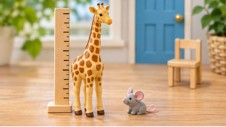
Imagine reaching a bookshelf or fitting through a doorway at each size. Which everyday task would become easier, and which harder? Suitable for roughly ages 3-6, with support and adaptations.
03. "Would you rather count every chair in our home or every shoe? Which do you think is more?"
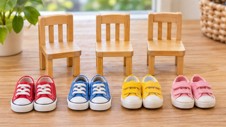
Ask for a guess before counting. Then count chairs and shoes together to see whether the first estimate was close. Suitable for roughly ages 4-7, with support and adaptations.
04. "Would you rather share 10 crackers equally between 2 children or between 5 children? How many would each child get?"
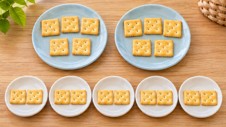
Use ten large paper cracker pictures. Share them evenly in two ways and ask how the amount for each child changes. Suitable for roughly ages 5-8, with support and adaptations.
05. "Would you rather have a pizza cut into 4 big slices or 8 small slices? Is there more pizza either way?"
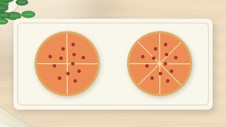
Draw two pizzas of equal size. Divide one into four slices and the other into eight, then compare the whole pizzas rather than only the slices. Suitable for roughly ages 6-8, with support and adaptations.
06. "Would you rather have $1 today or receive a dime each day for 14 days? Which gives more money, and why?"
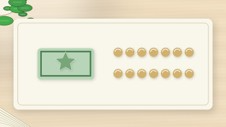
Draw a dollar bill and fourteen dime pictures. Group ten dimes together first, then explain how much remains. Suitable for roughly ages 6-8, with support and adaptations.
Deck 2: How Many Ways
These cards have one job: to prove that problems can have many solutions. Ask "how many ways," and a child who found one answer keeps going instead of stopping.
07. "How many ways can you sort these toys into two groups?"
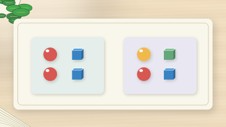
After the first sort by color, invite your child to regroup the very same toys by size or function. What changed: the toys or the rule? Suitable for roughly ages 3-6, with support and adaptations.
08. "How many ways can you show the number 5 on your fingers?"
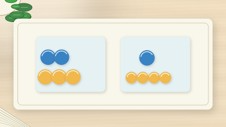
Make five using both hands in several different ways. Ask which combinations are new and which are simply reversed. Suitable for roughly ages 3-6, with support and adaptations.
09. "How many safe paths can you take from the couch to the kitchen without moving furniture?"
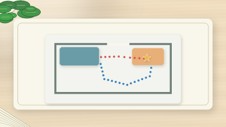
Choose two safe paths through an uncluttered room. Compare the number of turns, distance, and obstacles without racing. Suitable for roughly ages 3-7, with support and adaptations.
10. "How many ways can you build a square? Try fingers, sticks, blocks, or your whole body."
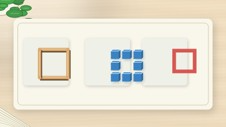
Try thick paper strips, craft sticks, or an outline made with arms. Does every version still have four sides and four corners? Suitable for roughly ages 4-7, with support and adaptations.
11. "How many ways can you share 12 large toy blocks among your family? Which ways feel fair, and why?"
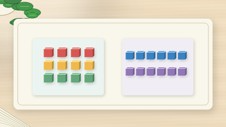
Use twelve large blocks to test several sharing plans. Is fairness always the same as giving everyone an equal number? Suitable for roughly ages 5-8, with support and adaptations.
12. "How many ways can you make 10 using fingers, drawings, or large blocks?"
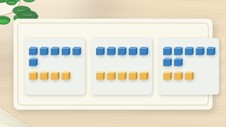
Build a ten-cube train, break it in two places, and describe each pair of parts. Can you find a new split that still makes ten? Suitable for roughly ages 6-8, with support and adaptations.
Deck 3: What If
These questions imagine a change and then ask children to reason through what could happen. Some are playful thought experiments; adults can help separate pretend ideas from real-world facts.
13. "What if everything round disappeared for one day? What couldn't we do?"
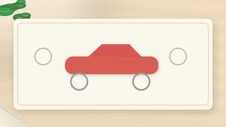
Look around for wheels, plates, and clock faces. What would happen to each object if round shapes disappeared? Suitable for roughly ages 3-7, with support and adaptations.
14. "What if you woke up as tall as the ceiling? What would be easy? What would be tricky?"
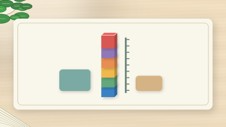
Compare two viewpoints with drawings. How would a chair, a bed, or a doorknob seem different if you were ceiling-tall? Suitable for roughly ages 3-6, with support and adaptations.
15. "What if there were no numbers at all? How would we know how old you are?"
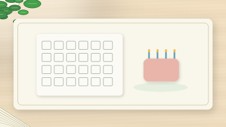
Imagine planning a birthday without numerals. What could you use to keep track of age, guests, and candles? Suitable for roughly ages 4-8, with support and adaptations.
16. "What if stairs came in giant steps and tiny baby steps? Which would get you upstairs faster?"
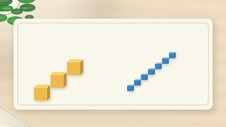
Use two drawings rather than climbing unfamiliar stairs. Predict how the number of steps changes when the steps become taller. Suitable for roughly ages 4-7, with support and adaptations.
17. "What if the week had one extra day? What would you name it, and what would happen on it?"
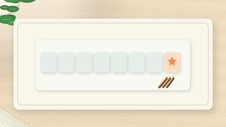
Draw seven calendar boxes and add an eighth. Ask where the new day belongs and what might happen to the family routine. Suitable for roughly ages 5-8, with support and adaptations.
18. "What if a toy store accepted only paper stars as payment? How would you decide whether a toy costs 2 stars or 5 stars?"
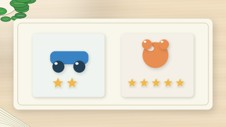
Play with large paper stars as pretend money. Decide which toy costs two stars and which costs five, then explain the pricing rule. Suitable for roughly ages 5-8, with support and adaptations.
Deck 4: Design It
Design It cards turn talk into making. Each one hides a math constraint — size, count, pattern, or rules — inside a build-it challenge, so the thinking continues with hands, not just words.
19. "Design a bed for a dinosaur. How big does it need to be? Show me with your arms or with blocks."
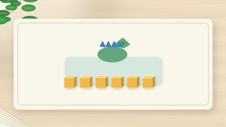
Estimate the length of a toy dinosaur with large blocks. Build a pretend bed and test whether the dinosaur fits. Suitable for roughly ages 3-6, with support and adaptations.
20. "Design a bridge out of blocks that a toy car can drive across without falling."
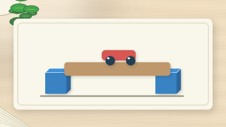
Build a block bridge and gently roll a toy car across it. If the car falls, compare two redesigns and test again. Suitable for roughly ages 3-7, with support and adaptations.
21. "Design a sock pattern using two or three colors. Can you create a rule that repeats three times?"
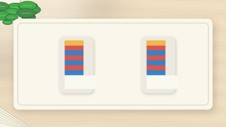
Use large sock picture cards in two colors. Build an A-B or A-A-B repeating rule and ask someone else to continue it. Suitable for roughly ages 4-7, with support and adaptations.
22. "Design a lunchbox that fits exactly 4 things. What goes in, and why those 4?"
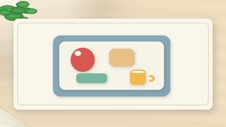
Choose four pretend lunchbox items. Explain the choices and check whether all four would fit in the space available. Suitable for roughly ages 4-7, with support and adaptations.
23. "Design a game using only one die and ten large blocks. Then teach me the rules."
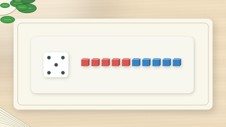
Create a game with one large die and ten safe blocks. Decide what happens on a turn, how points are earned, and how the game ends. Suitable for roughly ages 5-8, with support and adaptations.
24. "Design a map of your bedroom so a friend could find a hidden treasure."
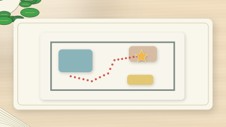
Draw a simple bedroom map with a bed, desk, and doorway. Ask a family member to follow the clues to a hidden toy. Suitable for roughly ages 6-8, with support and adaptations.
These prompts work with common household materials. Families can build a bridge from conversation to action with large blocks, paper shapes, and child-safe counters.
How to Respond: The Adult's Side of the Card
A card opens the discussion; the adult can help deepen it by asking what the child noticed or how a possible solution could be checked. Avoid treating every idea as automatically correct, and do not turn an open-ended question into a speed test.
Start Math educators have observed that when a child offers one solution, a calm follow-up such as 'What else could work?' can open a discussion of a second approach. Adults can then help the child test the ideas and explain the differences rather than accepting every suggestion uncritically.
Let children finish an idea before offering a hint, and ask what they noticed or how they reached a choice. When the answer can be checked, invite them to test it with blocks, drawings, or a real example.
Share your own thinking out loud, including a moment when you change your mind. A calm conversation about why one solution works better than another makes the challenge more valuable than a quick correct answer.
Guided questions are central to the SunStart Learning Method. If your child enjoys these open-ended challenges, try the related Critical Thinking Activities for Kids for hands-on examples, or explore age-appropriate family activities through PBS KIDS for Parents.
For families interested in structured hands-on extensions, the SunStart Logic and 2D/3D Shapes with Linking Cubes Kit includes linking cubes, a guided workbook, and digital learning activities that involve construction and spatial reasoning.
FAQ: Open-Ended Questions for Kids
What's the difference between open-ended and closed questions for kids?
A closed question usually asks for a specific answer; an open-ended question allows different approaches or responses. Both types can be useful. The learning comes from how children explain, test, and refine their ideas.
My child just says "I don't know." What should I do?
Offer two concrete choices, model one short response, or use objects to make the problem visible. Avoid imposing a timetable for when the child must become comfortable answering.
How often should we do problem-solving activities like these?
Try one prompt when it fits naturally into a family routine. A short, enjoyable exchange is more valuable than reaching a fixed daily quota.
Are these prompts too easy for my 7-year-old?
Prompts can be made more demanding by adding a new constraint or asking for evidence. "Make 10" might become "show three ways to make 10 and explain how you know each one works."
About the Author — SunStart Education Team. Written by the SunStart Education Team, drawing on Start Math (思達創旭)'s Guided Creative Thinking approach. Start Math's educational work dates to 1988; its published organizational history records more than 400 sets of teaching aids and lesson plans. Start Math: Organizational History